



Wine education
A complete guide to what makes Mendoza wine different from any other: terroir, varieties, regions, history and how to choose a good bottle.
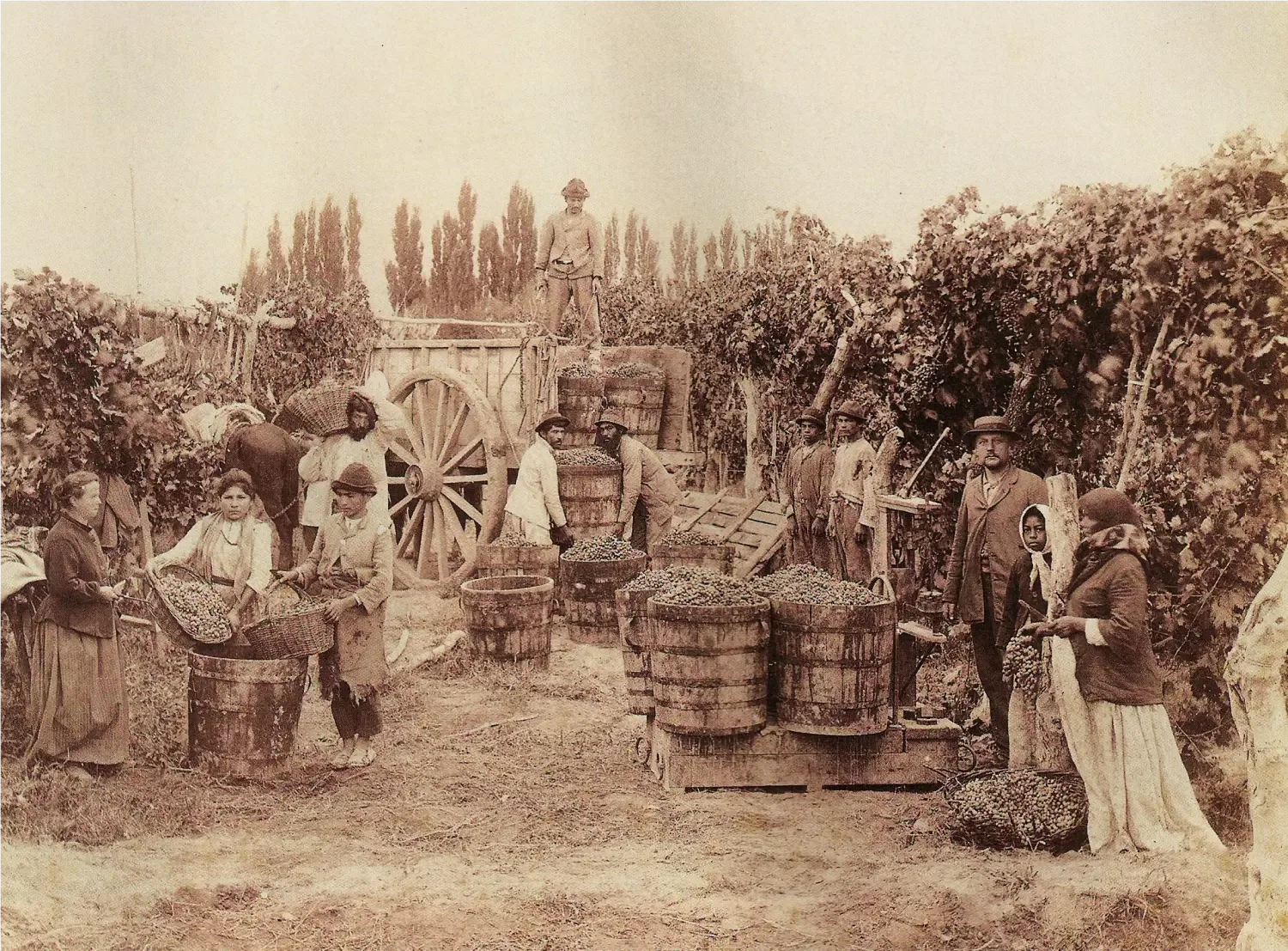
Mendoza wine is wine produced in the province of Mendoza, Argentina's most important wine region and one of the most celebrated in the world. If you've landed on this page, you probably want to understand what makes Mendoza wine unique, what its main varieties are and why so many travellers from around the world choose this region. This guide answers those questions in depth.
What Mendoza wine is
When we talk about "Mendoza wine" we mean wines made from grapes grown and vinified in the province of Mendoza, Argentina. The province accounts for roughly 70% of the country's wine and is the reason Argentina is the world's fifth-largest wine producer and sixth-largest exporter.
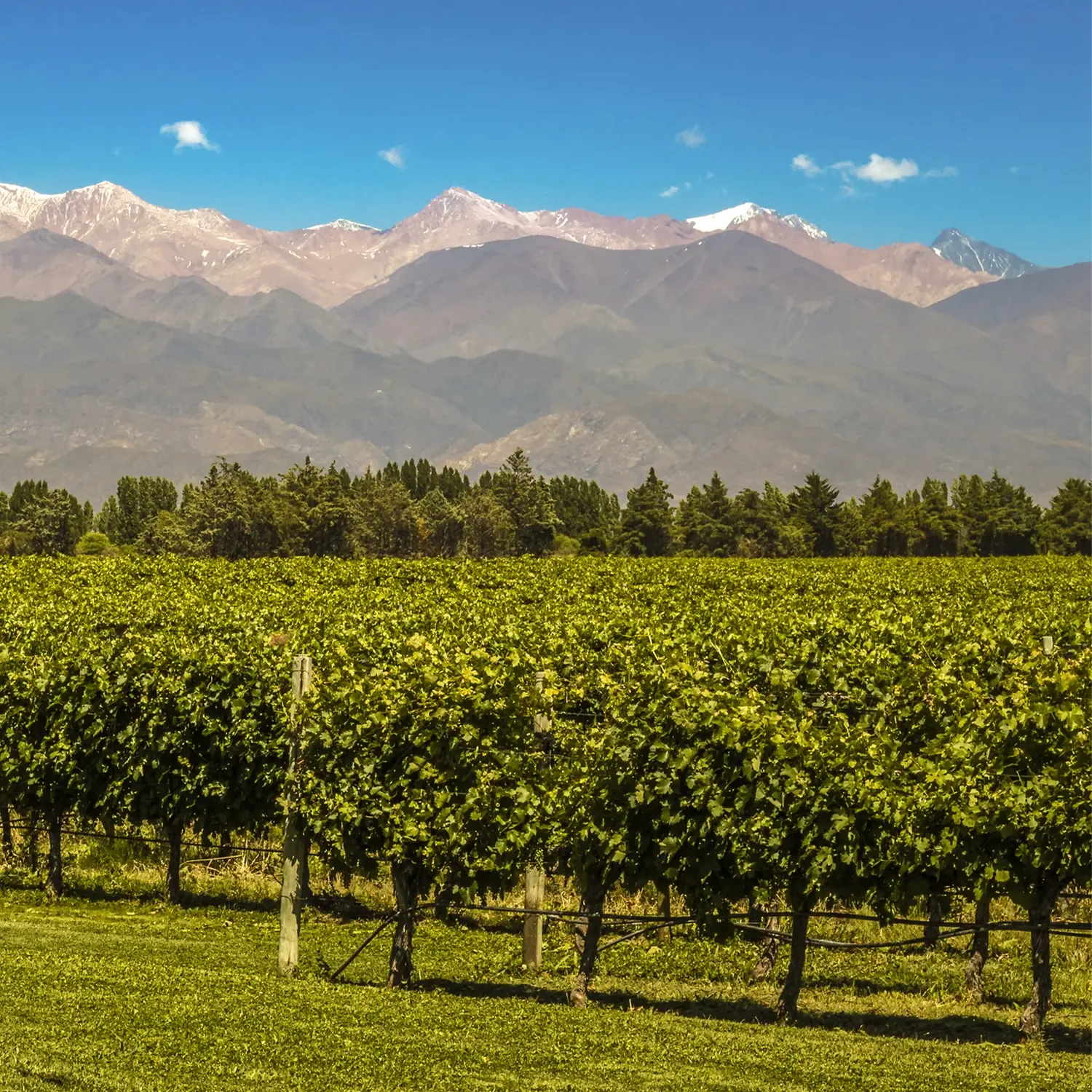
Mendoza wine differs from other wines in the world through a specific combination of natural factors: altitude (between 600 and 1,700 metres above sea level), a dry continental climate, wide daily temperature swings, alluvial soils and pure snowmelt from the Andes. Together they let the grapes reach full phenolic ripeness while retaining good acidity, which translates into wines of great concentration, intense colour and natural freshness.
The varieties of Mendoza wine
Malbec — the emblematic variety
Malbec is, beyond argument, the emblematic variety of Argentine wine and of Mendoza wine in particular. Native to Cahors (south-west France), it arrived in Argentina in 1853 with the French agronomist Michel Aimé Pouget. In Mendoza it found ideal conditions to express its potential: it ripened better and developed deeper colour, silkier tannins and more complex aromas than in its homeland. Today, Mendoza is the world capital of Malbec.
To go deeper into how Malbec became what it is today, see our complete history of Malbec in Argentina.
Other notable red varieties
- Cabernet Sauvignon — The second most planted red variety. It produces structured, long-lived wines.
- Cabernet Franc — The variety gaining ground as "the next Malbec" among many boutique producers.
- Bonarda — The second most planted variety in Argentina, offering fruity, approachable wines.
- Petit Verdot, Syrah, Tempranillo — Still developing, with very good results in the Uco Valley.
White varieties
- Torrontés — A native Argentine variety, aromatic and fresh. It produces the country's most characteristic whites.
- Chardonnay — Excels in the high zones of the Uco Valley such as Gualtallary.
- Sauvignon Blanc, Semillon, Viognier — Growing, with interesting expressions.
Why Mendoza wine is unique in the world
Four factors combined make Mendoza wine unique:
- Extreme altitude — Few regions in the world have vineyards at 1,500 metres like those of the Uco Valley. Altitude increases solar radiation and the temperature swing, two key factors in polyphenol concentration.
- Daily temperature swing — Up to 20°C difference between day and night during ripening. This preserves fruit aromas and natural acidity.
- Poor, well-drained soils — Alluvial, with rounded stones, sand and limestone. They stress the vine, which concentrates flavour in the grapes.
- Pure Andean snowmelt — Mendoza's irrigation system, originated by the Huarpe people and refined by Jesuits and European immigrants, distributes water of exceptional purity with precision.
To understand how altitude specifically transforms a wine's character, see high-altitude wines in the Uco Valley.
Mendoza's wine-producing regions
Luján de Cuyo
The historic region and Argentina's first controlled designation of origin (DOC), established in 1989 specifically for Malbec. It concentrates the most traditional wineries and a high share of premium production. Key sub-regions: Vistalba, Las Compuertas, Agrelo, Perdriel. More in our Luján de Cuyo guide.
Uco Valley
The newest region and the fastest-growing over the past two decades. It covers Tupungato, Tunuyán and San Carlos, at altitudes between 1,000 and 1,700 metres. It's home to the most cutting-edge wineries and the most ambitious architectural projects. See our Uco Valley guide.
Maipú
The oldest region, founded in 1561. Traditional family wineries, century-old olive groves and the area where much of Argentina's olive crop is grown. See our Maipú guide.
Other regions
- Eastern Mendoza (San Martín, Junín, Rivadavia) — Higher-volume production, everyday wines.
- Southern Mendoza (San Rafael, General Alvear) — A terroir distinct from the north, with an identity of its own.
How to choose a good Mendoza wine
If you're choosing a bottle, look for these four things on the label:
- Specific region — The more specific the indication (Vistalba, Gualtallary, Paraje Altamira), the greater the expression of terroir.
- Vintage — Cool vintages such as 2020 and 2022 give fresher wines; warm ones such as 2017 and 2023, more concentrated ones.
- Producer — Family and boutique wineries tend to show more terroir than mass-market brands.
- Price range — Between USD 15 and 40 a bottle gets you very good quality wines.
How to experience Mendoza wine at the source
The best way to understand Mendoza wine is to visit the region. Private tours with a sommelier let you get to know the wineries first-hand, taste wines that aren't exported and understand the terroir from the vineyard itself. See our fine wine experiences in Mendoza.
FAQ
What is Mendoza wine?
Mendoza wine is wine produced in the province of Mendoza, Argentina, the most important wine region in South America and one of the most celebrated in the world. It's defined by the altitude of its vineyards (between 600 and 1,700 metres above sea level), a dry continental climate with wide daily temperature swings, alluvial soils with rounded stones and limestone, and irrigation with snowmelt from the Andes. Together these produce wines of great concentration, intense colour and full phenolic ripeness, with Malbec as the emblematic variety.
What are the main varieties of Mendoza wine?
The main red varieties are Malbec (the emblem, planted in more than 50% of Argentina's vineyards), Cabernet Sauvignon, Cabernet Franc, Bonarda and Petit Verdot. Among whites, Torrontés (a native Argentine variety), Chardonnay, Sauvignon Blanc and Semillon stand out. Each variety expresses itself differently by sub-region: Luján de Cuyo Malbec is more structured and classic, while Uco Valley Malbec is fresher and more mineral because of the altitude.
Why is Mendoza wine unique in the world?
Four factors make Mendoza wine unique: (1) extreme altitude, matched by few regions in the world, which produces grapes with greater concentration and natural acidity; (2) the daily temperature swing (up to 20°C between day and night), which preserves aromas and freshness; (3) poor, well-drained soils, which stress the vine and concentrate flavour; (4) pure snowmelt, precisely controlled by irrigation systems inherited from the Huarpe people. Add to that a winemaking tradition of more than 450 years since the arrival of the Jesuits.
What are Mendoza's wine-producing regions?
Mendoza has five main wine regions: Luján de Cuyo (the historic one, the designation of origin for Argentine Malbec), Maipú (the oldest, known for its family wineries and olive groves), the Uco Valley (the highest and most modern, with Tupungato, Tunuyán and San Carlos), Eastern Mendoza (San Martín, Junín, Rivadavia, higher-volume production) and Southern Mendoza (San Rafael and General Alvear, a terroir distinct from the north). The first three account for most premium wine tourism.
How do you choose a good Mendoza wine?
To choose a good Mendoza wine, consider: (1) the specific region on the label (Luján de Cuyo, the Uco Valley, Gualtallary, etc.), because each terroir brings a different profile; (2) the vintage (cool years such as 2020 and 2022 give fresher wines; warm ones such as 2017 and 2023, more concentrated ones); (3) the producer (family and boutique wineries tend to show more terroir than mass-market brands); (4) the price range (between USD 15 and 40 a bottle gets you very good quality wines).
What is the Luján de Cuyo designation of origin?
Luján de Cuyo was the first controlled designation of origin (DOC) in Argentina and South America, established in 1989 specifically for Malbec. To carry it, a wine must contain at least 80% Malbec, come from Luján de Cuyo vineyards within maximum yields per hectare, and undergo a minimum period of barrel ageing. It's a seal of origin and quality that recognises the area's historic role as the cradle of Argentine Malbec.
Want to experience Mendoza wine at the source? Message us on WhatsApp and we'll design a tailor-made private tour within 24 hours.
More questions? Take a look at our FAQ with 25 common questions about tours, pricing, logistics and the High Mountain excursion.
Written by
Vito Wine Tours
Want to live it?
Discover Mendoza wine at the source
Private tour with a sommelier · Bilingual driver · Top wineries · Tailor-made itinerary