
Home › Blog › ">→Aconcagua from Mendoza
Aconcagua
The highest mountain in the Americas (6,961 m) is 200 km from Mendoza. Here's how to see it, what to expect from Aconcagua Provincial Park and why it fascinates the world.
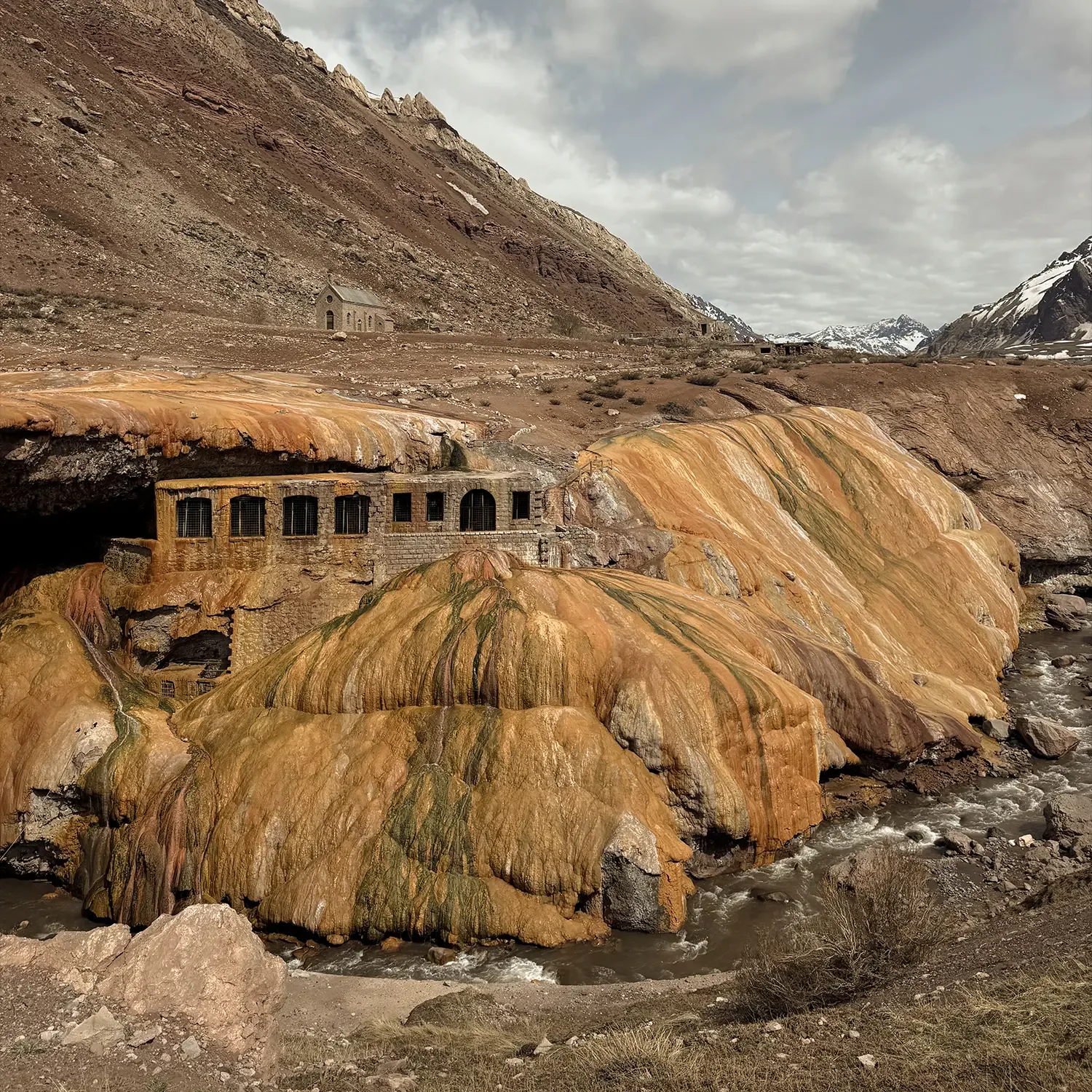
Cerro Aconcagua is one of South America's most important natural icons: at 6,961 metres it's the highest mountain in the Americas and the highest in the world outside the Himalayas. It stands in the province of Mendoza, 200 km from the city, and you can visit and photograph it without being a mountaineer.
Aconcagua in numbers
- Height: 6,961 metres above sea level
- World ranking: the highest mountain in the Americas and the highest in the world outside the Himalayas
- Location: province of Mendoza, Argentina, 200 km from the city of Mendoza and 80 km from the Chilean border
- Aconcagua Provincial Park: 71,000 protected hectares
- First ascent: 1897 (Matthias Zurbriggen)
- Climbing season: mid-November to mid-March
- Part of: the Seven Summits
What Aconcagua looks like from the viewpoint
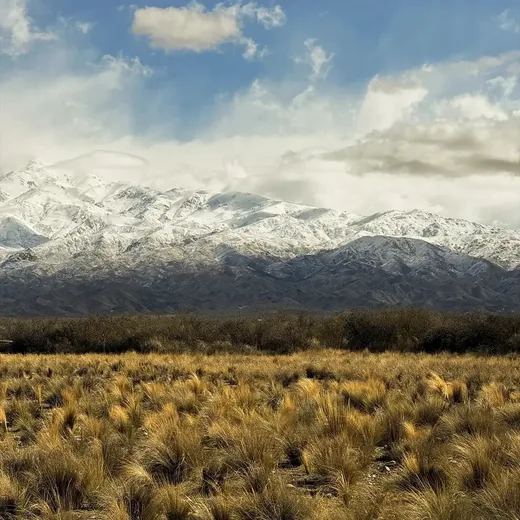
From the Aconcagua Provincial Park viewpoint (~2,900 m) you see the south face of Aconcagua, its most impressive side, with a vertical wall of 3,000 practically sheer metres. It's the tallest wall in the southern hemisphere and one of the greatest challenges in world mountaineering.
The distance from the viewpoint to the base of Aconcagua is roughly 4 km in a straight line. In good weather the view is crisp and you can appreciate the mountain's geology: sedimentary strata, hanging glaciers and vertical walls.
How to get to Aconcagua from Mendoza
Access is via National Route 7, known as the Bioceanic Corridor, which links Mendoza with Santiago de Chile. The route is:
- The city of Mendoza (750 m) → Potrerillos (1,350 m) → Uspallata (1,900 m) → Puente del Inca (2,720 m) → Aconcagua Park (viewpoint ~2,900 m)
- Total distance: 200 km
- Travel time: 3 to 4 hours depending on stops
- Road condition: fully paved and in good condition
Aconcagua is the main stop on the High Mountain excursion, which also includes Potrerillos, Uspallata and Puente del Inca. See our complete High Mountain guide.
Aconcagua's history and culture
Aconcagua was revered by the Incas as a ceremonial site. In 1985 the "Cerro Aconcagua mummy" was discovered on the mountain: a 7-year-old Inca child buried at 5,300 m as a ritual offering, dated to roughly 500 years ago. The mummy is currently on display at the Museo del Área Fundacional in Mendoza.
The first confirmed ascent by foreigners was made by the Swiss guide Matthias Zurbriggen in 1897, during a British expedition led by Edward FitzGerald. Since then, thousands of mountaineers attempt the summit every year.
Climbing Aconcagua (for information only, not a service we offer)
Climbing Aconcagua is one of the most popular high-altitude expeditions in the world, but it requires serious preparation:
- Typical duration: 14 to 21 days (including acclimatisation)
- Main routes: the Normal Route (the most used) and the Polish Route (intermediate technical)
- Mandatory permits issued by the Government of Mendoza
- Licensed guides are mandatory
- High-mountain equipment (tent, thermal clothing, crampons, ice axe)
Vito Wine Tours doesn't offer climbing expeditions. What we do offer is the visit to Aconcagua Park and the viewpoint, accessible to everyone.
What to bring when visiting Aconcagua
- Layered clothing (it's cold at altitude, even in summer)
- A windproof jacket
- Sunglasses (high UV exposure at altitude)
- Sunscreen (SPF 50+)
- A water bottle (altitude dehydrates)
- Comfortable closed shoes
- A camera with a charged battery
- Argentine pesos for the park entrance
Combining Aconcagua with wine tours
The visit to Aconcagua is part of the High Mountain day. If your Mendoza trip is 3 days or longer, combine Aconcagua with private wine tours in Luján de Cuyo and the Uco Valley. See the suggested 3-day itinerary.
FAQ
What is Cerro Aconcagua?
Cerro Aconcagua is the highest mountain in the Americas at 6,961 metres above sea level, and the highest in the world outside the Himalayas. It stands in the province of Mendoza, Argentina, 200 km from the city of Mendoza, inside Aconcagua Provincial Park. It's one of the Seven Summits, the highest mountains on each continent.
Can you see Aconcagua from the city of Mendoza?
Not directly from the city. The city of Mendoza sits at about 750 m. To see Aconcagua you have to go to Aconcagua Provincial Park, 200 km along National Route 7, reaching the viewpoint in roughly 3 to 4 hours by car. It's the main stop on the High Mountain excursion.
Do you need to enter Aconcagua Park to see it?
Yes. The Aconcagua viewpoint is inside the Provincial Park. There's a park entrance fee (roughly 5,000 to 10,000 Argentine pesos per person in 2026, subject to change). From the viewpoint, a short 10 to 15-minute walk leads to the spot where you see Aconcagua's south face up close.
Can anyone climb Aconcagua?
Climbing to the summit of Aconcagua is for mountaineers with technical experience and prior acclimatisation. It requires a 14 to 21-day expedition, specialised equipment and a licensed guide. It isn't a standard tourist activity and we don't offer it. What we do offer is the visit to the park and the Aconcagua viewpoint, an experience accessible to everyone.
What's the best time to see Aconcagua?
Aconcagua Park is accessible year-round on most days. The best conditions for visiting and photographing it are: March to April (autumn, clear views and mild temperatures), September to October (spring, peaks still snow-capped) and December to February (summer, best visibility of the south face). In winter it's snow-covered, but some access roads can close because of snow.
Why is it called Aconcagua?
The name Aconcagua comes from Quechua or Huarpe (there's no definitive consensus). A common interpretation derives it from 'Akon-Kahuak' (stone sentinel) or 'Anco Cahuac' (white sentinel). The mountain was revered by the Incas as a ceremonial site; in 1985 an Inca mummy was found at 5,300 m, evidence of pre-Columbian rituals.
When was it first climbed?
The first confirmed ascent was in 1897 by the Swiss guide Matthias Zurbriggen, a member of an expedition led by Edward FitzGerald. Before that, the Incas had already climbed to at least 6,500 m, as shown by the mummies and artefacts found on the mountain.
How many people die on Aconcagua each year?
Aconcagua has a considerable fatality rate: roughly 3 to 5 deaths a year among the approximately 7,000 climbers who attempt the summit annually. The main causes are high-altitude pulmonary and cerebral oedema, hypothermia and falls. That's why the climb is only for experienced mountaineers. Tourist visits to the park and viewpoint are completely safe.
Want to see Aconcagua? It's the main stop on the High Mountain route. Message us on WhatsApp and we'll put the day together.
More questions? Take a look at our FAQ with 25 common questions about tours, pricing, logistics and the High Mountain excursion.
Written by
Vito Wine Tours
Want to live it?
Visit Aconcagua with us
A full day in the Andes · Bilingual driver · Park access · Plan within 24 hours